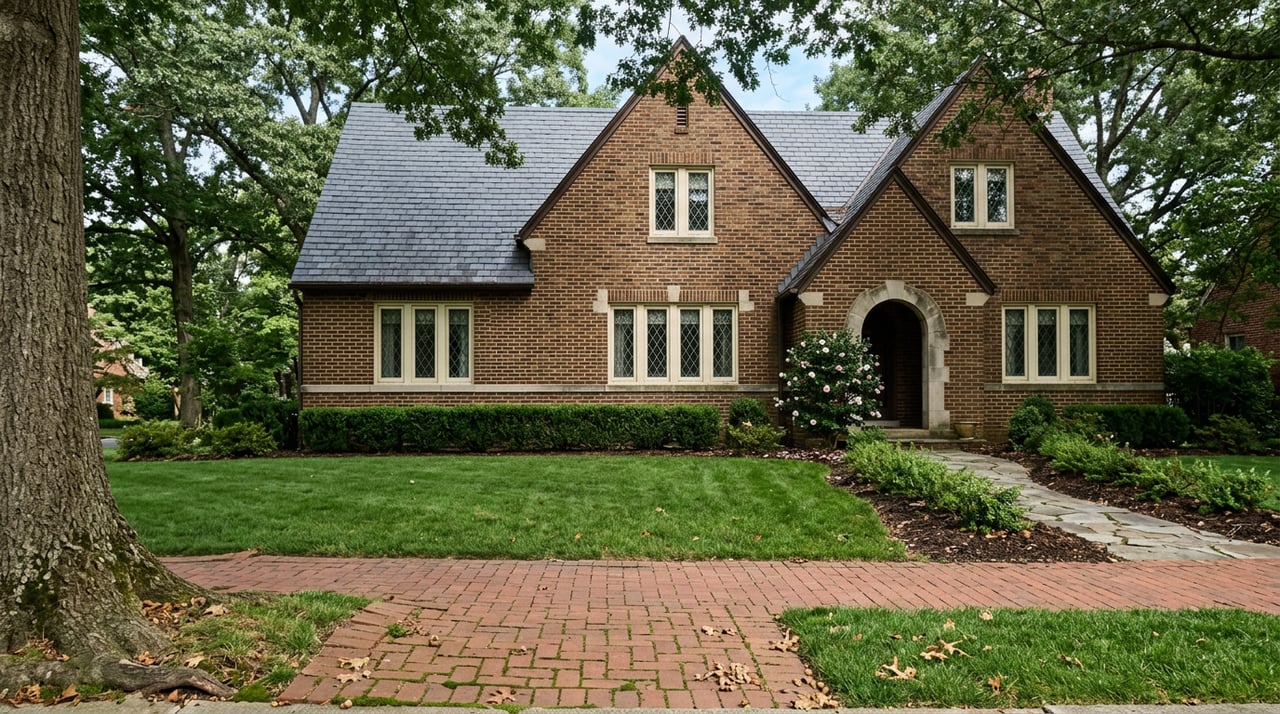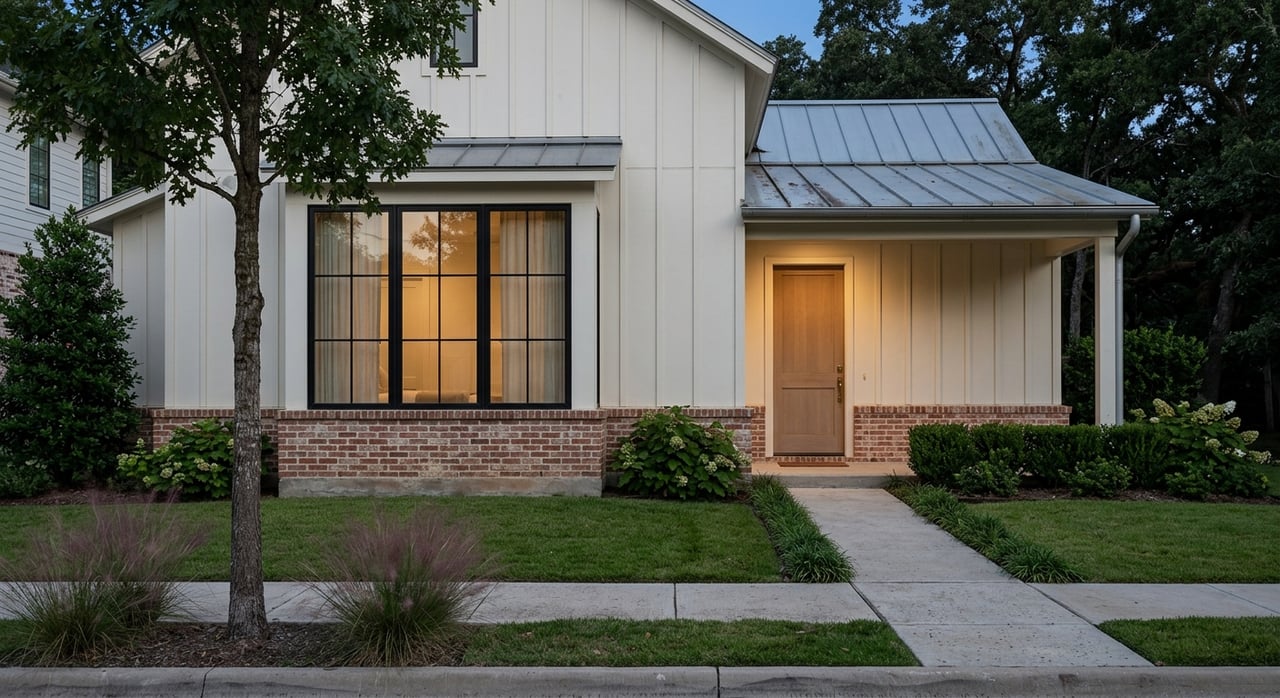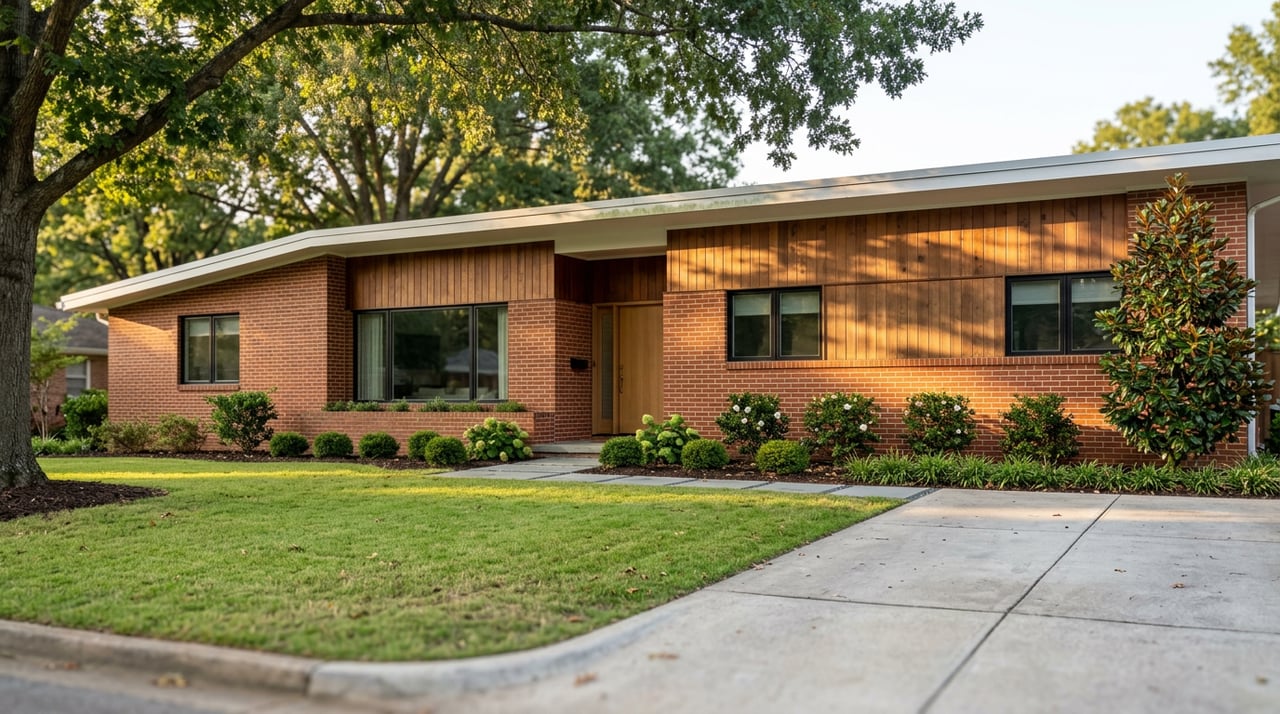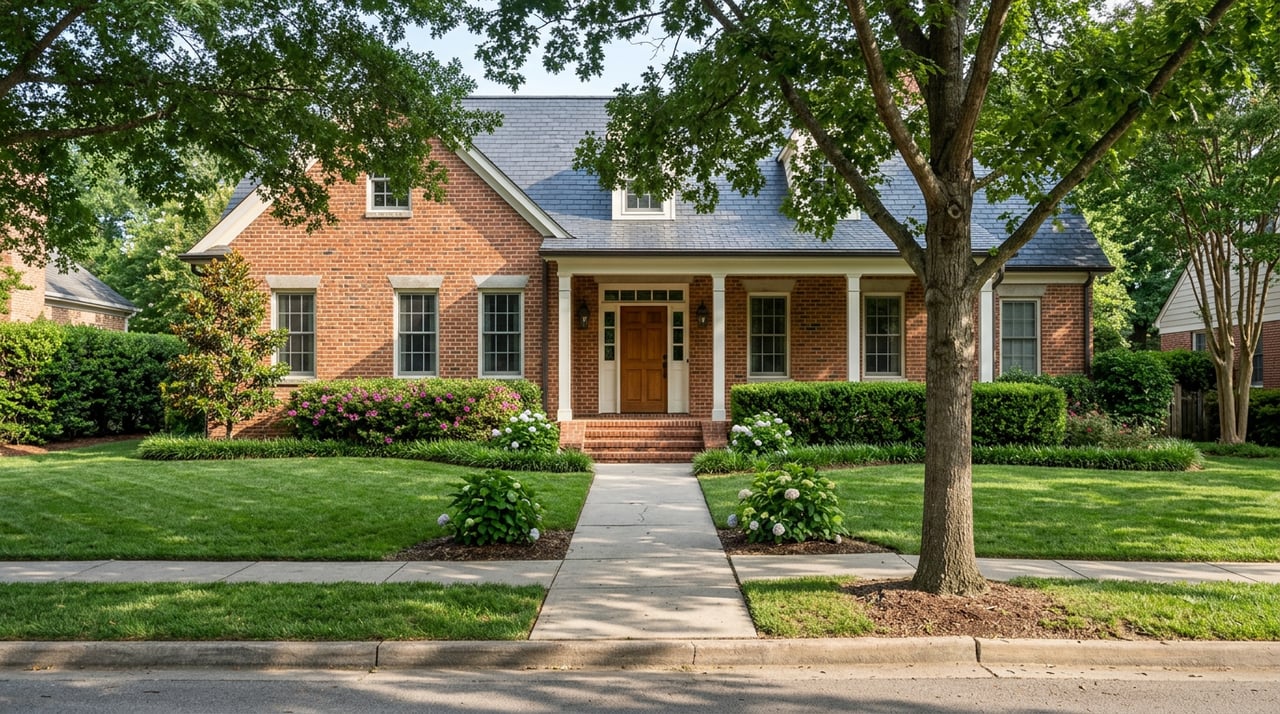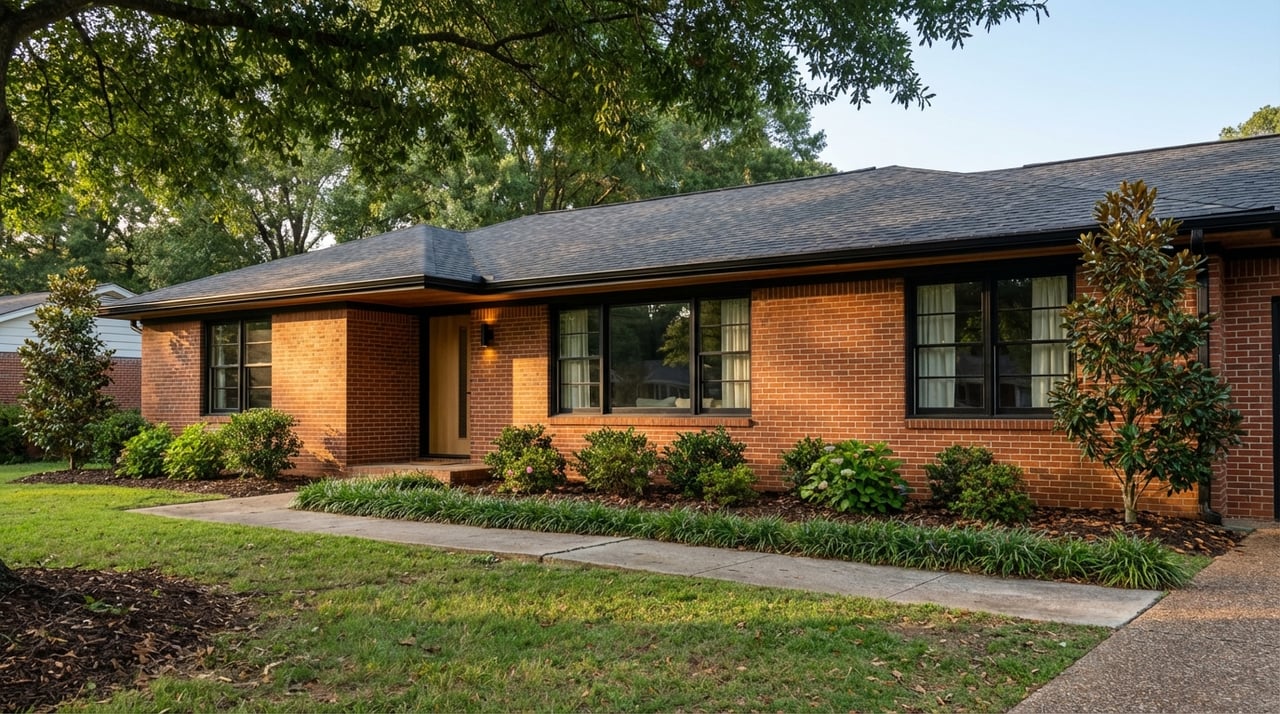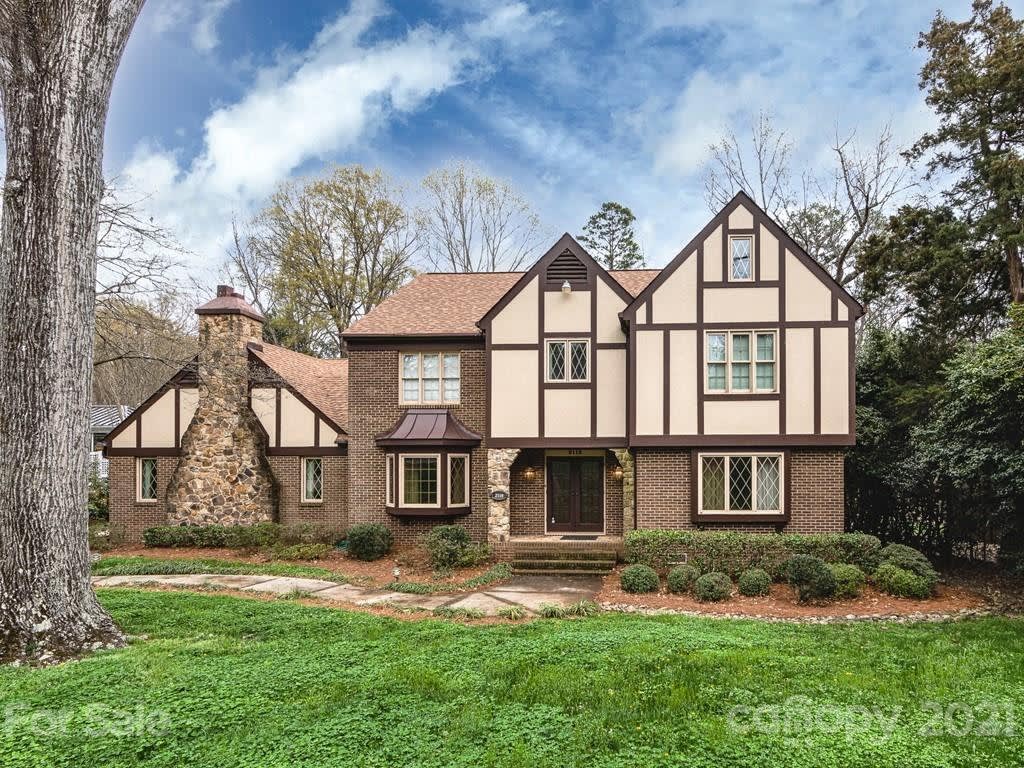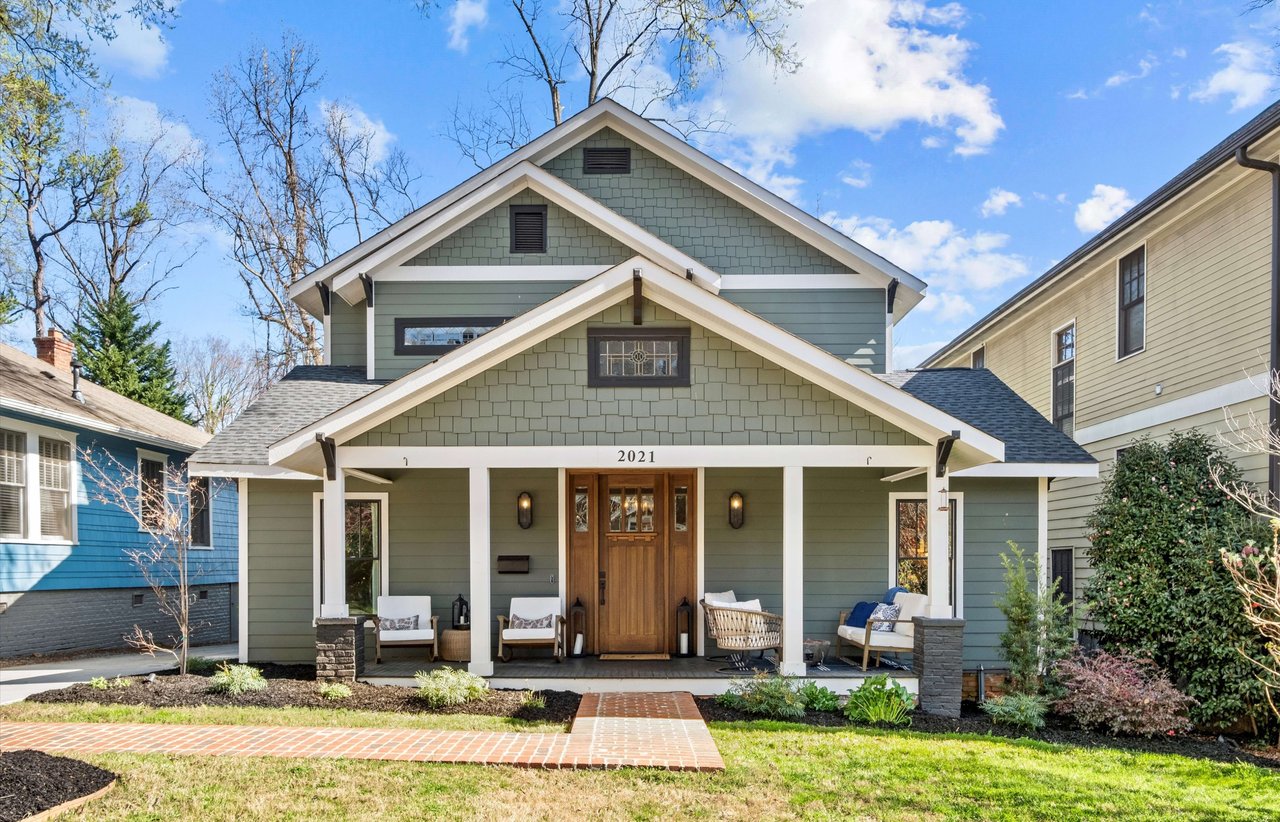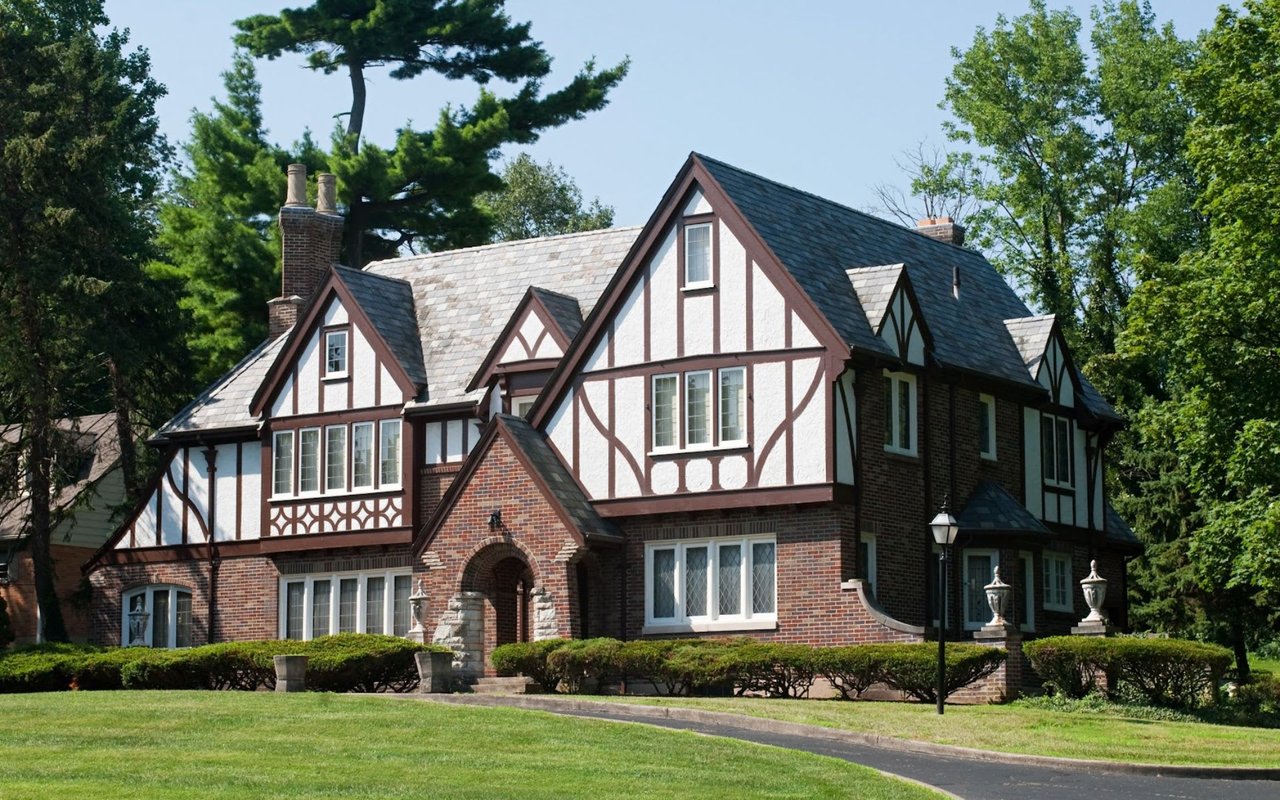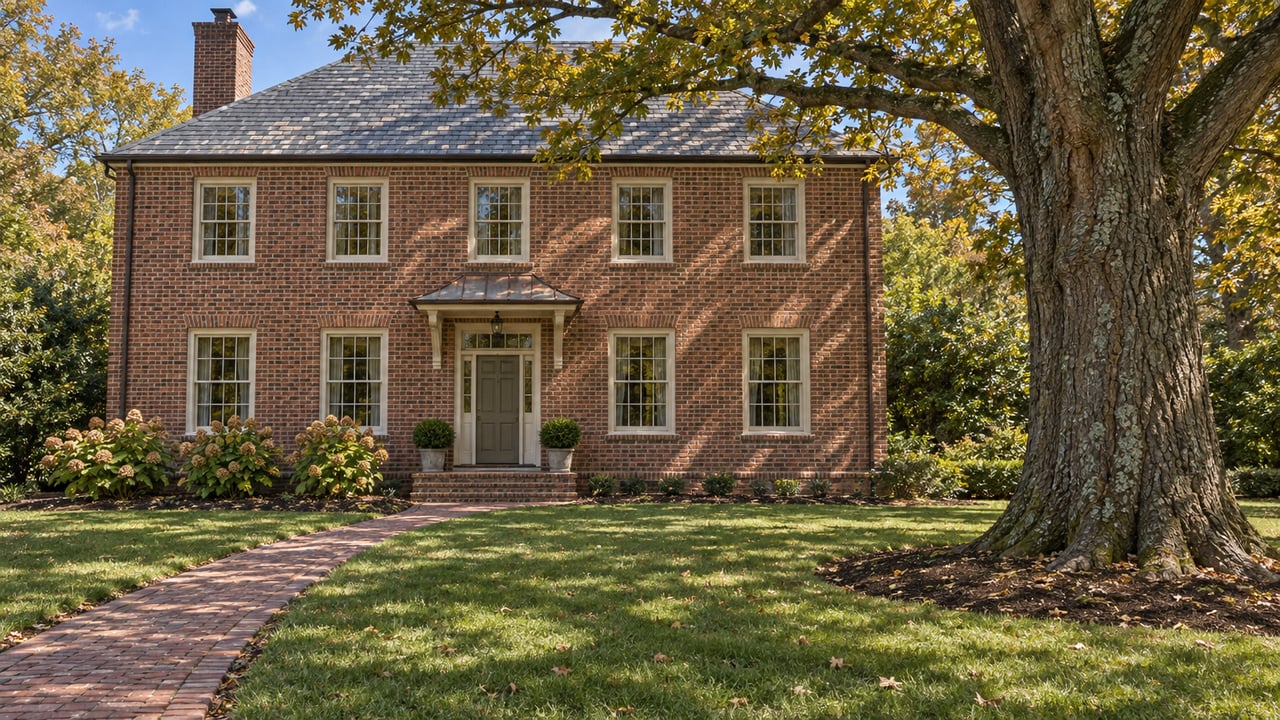
On a corner lot near Freedom Park, a few blocks from Myers Park, a 100-year-old oak stands in front of a house that's about to be replaced. The Charlotte Observer reported on October 16 that the house sold in April for $1 million. City records show a plan to replace the one-story, 2,474-square-foot home with a two-story house of 6,442 square feet.
The city records show what removing the corner oak and a second heritage tree in the backyard will cost: $3,000 and two replacement trees.
On a $1 million lot, that works out to three-tenths of a percent. Charlotte's heritage tree rules don't make a big oak expensive to remove. They make it slow and procedural to remove. If you're buying an older Myers Park house to expand or rebuild, the permit sequence, the tree's root zone, and the city-owned street trees will shape your project more than any mitigation check.
The price list is short, and it's public
The rules sit in Section 20.14 of the city's Unified Development Ordinance, which took effect in June 2023. A heritage tree is any species native to North Carolina measuring at least 30 inches in diameter at 4.5 feet above the ground. Ash species are excluded.
There are two separate charges. One is a review fee for the permit. The other is a mitigation payment for each tree removed. People mix them up all the time. Here they are for projects that pass the city's Gateway intake between July 1, 2026, and June 30, 2027:
| Project on the lot | City review fee, FY2027 | Mitigation per heritage tree removed |
|---|---|---|
| New single-family home, including a teardown rebuild | $405, Tier 3 review | $1,500 plus one replacement tree. Each extra tree planted cuts the fee by $250, and six extra trees bring it to $0 |
| Removal for a garage, ADU, pool, or no construction at all | $215, non-development permit | $500 plus one tree, or three trees total, or two trees plus $250 |
| Either path, preserving a qualifying specimen tree instead | Same as above | No other mitigation required |
| Tree in extreme poor health | Permit at no cost | None |
The source documents are the city's Tier 3 single-lot checklist, its non-development heritage tree checklist, and the FY2027 residential fee schedule.
The $1,500 a tree on the project near Freedom Park fits the new-home row exactly. The city also expects most requests to be approved. "The heritage tree regulation is a limited preservation requirement and prioritizes mitigation. Heritage trees can be removed in most cases," city media relations manager Jack VanderToll wrote to The Charlotte Ledger, in a story WFAE published September 24.
The ordinance spells out when that happens. A tree can come out if it or its critical root zone sits where a structure or improvement may go and creates a "documented and confirmed conflict," or if keeping it would unreasonably restrict use of the property. On a lot where the buyer plans a bigger house, a big oak in the building area usually counts as that conflict.
A modest addition can trigger the rules
Section 20.14 applies to development activity in three cases: a new principal structure, a subdivision, or a cumulative increase in built-upon area or building coverage of at least 5% or 1,000 square feet, whichever is less.
That third trigger catches many renovation buyers off guard. You don't have to tear anything down. A rear addition, a wider driveway, or a new terrace can all add built-upon area. On a lot with a heritage tree, the city's residential review page sends projects other than a new home into Tier 2 review whenever protected trees are on the property. For FY2027, that review costs $350.
The paperwork is mostly drawings. A teardown rebuild needs a landscape-style plan that shows the location, species, and diameter of every heritage tree and every right-of-way tree, plus protection fencing for any tree you're keeping. For a house designed around an existing oak, all of this goes on the site plan before anyone pours a footing.
Touching the roots early is the expensive mistake
The rule that costs people money is about timing. Under the UDO, no tree-disturbing activity may affect a heritage tree until the city has approved and issued the permit. Removal can't start until the mitigation payment is in and a planting plan is approved. Removing the tree or disturbing its critical root zone without a permit brings civil penalties.
The ordinance covers disturbance of the critical root zone as well as removal, so work under the canopy can fall within the rule before the tree itself is touched.
The city has enforced this. WFAE and the Ledger reported that the city collected $53,760 from 25 violations between January 2025 and late summer 2026, about $2,150 per violation on average. That's more than the $1,500 the city would have charged to remove the tree legally.
The ordinance also limits whose roots count. A heritage tree's critical root zone includes only the root area on the parcel where the trunk grows. On narrow in-town lots, where a neighbor's oak often leans over the property line, that boundary can come up early in design.
The oak along the curb belongs to the city
In Myers Park, many of the trees buyers fall for stand in the planting strip between the sidewalk and the street, and those trees aren't the owner's. The city's Tier 3 checklist calls right-of-way trees city assets, "protected all at time." When removal is authorized, mitigation runs $200 for each inch of diameter. At the 30-inch heritage threshold, that would be $6,000 for a single street tree, four times the per-tree payment for a heritage oak in your own backyard.
New-home permits also require frontage trees: one large-maturing shade tree for every 40 feet of lot frontage, or one small-maturing tree every 30 feet under overhead power lines. Corner lots have to meet the requirement on both street frontages. A new driveway cut, a moved walk, or a utility tap that runs near a street tree becomes part of that design conversation.
An aging canopy complicates the math
Myers Park's streets follow John Nolen's design from around 1911, according to the Myers Park Homeowners Association's spring 2026 Oak Leaf. In 2015, the Observer reported, in a story republished by WBTV, that most willow oaks in Charlotte's older neighborhoods were planted between 1895 and 1923 and were aging together. That same year, a TreesCharlotte event description put a willow oak's potential life at about 120 years on an ideal site. It said Charlotte's urban trees deserve attention as they reach 60, 80, or 100 years. Arborists don't agree on how long any single tree has left.
The tree's condition matters because the ordinance treats a declining tree very differently from a healthy one. A heritage tree in "extreme poor health" can come down with a city permit that costs nothing and requires no mitigation. The UDO defines that condition two ways. In the first, an ISA-Certified and Tree Risk Qualified arborist rates the tree high or extreme risk and expects it to fall within two years. In the second, the tree has 25% or less live canopy. A tree that is actively failing, or expected to fail within two weeks, can be removed as an imminent hazard, documented in advance where possible, also without mitigation.
So on a Myers Park lot, a written arborist assessment of the big trees answers two questions at once. It tells you whether a tree can stay through construction, and it tells you which section of the ordinance would apply if it can't.
The neighborhood is already replanting. MPHA's spring 2025 Oak Leaf reported a record 75 trees planted that winter on private property and in the right-of-way, with Roundtree Companies installing them. It also reported well over 500 trees planted in Myers Park with the city over the past few years, supported in part by the Jack McNeary Tree Fund. MPHA's Fall 2025 member offer listed willow, white, and red oaks at $460 each, 2 to 2½ inches in caliper and 10 to 12 feet tall. That size clears the city's minimum for a mitigation tree, which is 2 inches in caliper and 8 feet tall. Check mpha.com for whether the program is running this winter.
Before you write the offer
For a buyer looking at an older Myers Park house with a large oak on the lot, the tree questions belong in due diligence alongside the roof and the foundation:
- Its size. Diameter at 4.5 feet decides whether the heritage rules apply at all, and the threshold is 30 inches.
- Its location. The trunk may sit on the lot, on a neighbor's parcel, or in the city right-of-way, and each case follows a different rule and price.
- Its root zone against the plan. The addition or new footprint and the tree's root zone show up together on the site plan the city reviews.
- Its condition, in writing. An arborist's rating affects both the construction plan and the permit path.
- The permit sequence. The UDO bars tree-disturbing activity that affects a heritage tree until the city issues the permit.
This is general information, not legal, tax, or financial advice. Confirm how the rules apply to your property with the City of Charlotte's urban forestry staff, a certified arborist, and your own attorney or builder.
FAQ
Has the city changed the heritage tree rules recently? The UDO's official amendment history lists petition 2025-118, adopted and effective March 23, 2026, as the latest amendment and describes it as a broad maintenance amendment. None of the listed amendments is aimed specifically at heritage trees, and the city's urban forestry staff can confirm which version of the rules applies to your project.
How often do people pull these permits? From June 2023 through August 19, 2026, the city received 2,390 heritage tree removal permits: 1,085 non-development and 1,305 tied to development. It has collected about $4.5 million in mitigation fees. One permit doesn't necessarily mean one tree.
Where does the mitigation money go? WFAE and the Ledger reported that it goes into a city fund dedicated to tree protection, management, and long-term land acquisition.
If you're weighing a Myers Park house with a big oak on the lot, we'll walk it with you before you make an offer. We'll look at where the trunk sits, what the root zone covers, and how that fits the addition or rebuild you have in mind. Real Estate Layne looks at lots the way a builder does, and the tree is part of the site plan from the first visit. Let's Connect.